From BMW to Bureaucracy: How Toilet Access Exposes Inequality and Poverty
Before reading further, take 30 seconds to count: * How many toilets/bathrooms are in your house? * How many people live
Before reading further, take 30 seconds to count: * How many toilets/bathrooms are in your house? * How many people live

Ask any IBDP Economics teacher, and they'll tell you that mastering supply and demand curves and the AD/
In the IB Economics course, the difference between a good essay and an excellent one often lies not in what

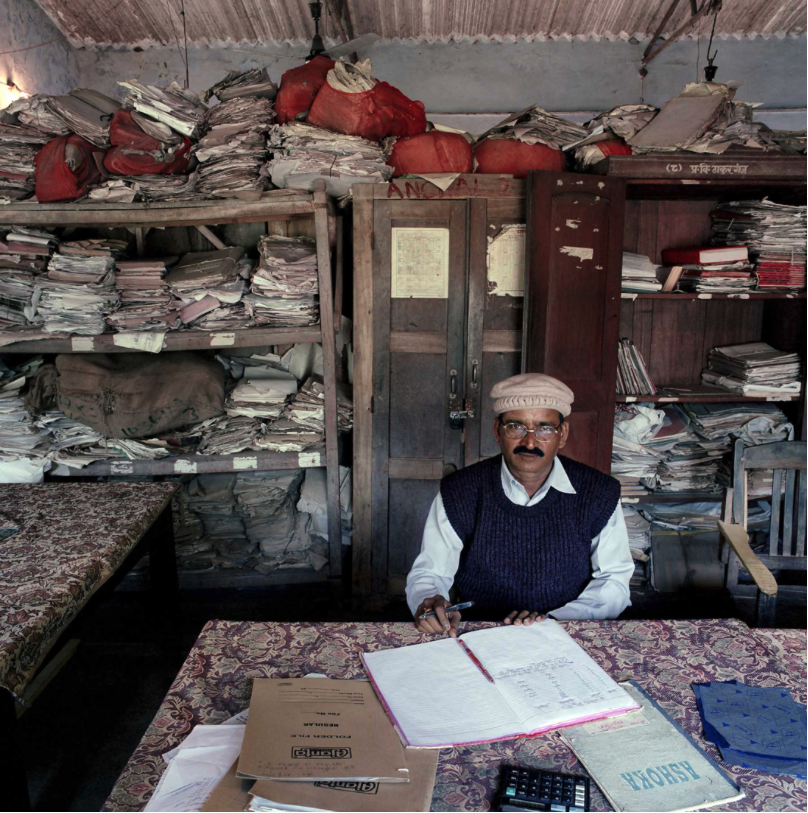
Reading a recent article from The Guardian ‘Spreadsheets of empire’: red tape goes back 4,000 years, say scientists after Iraq finds, I was reminded of the work of photographer Jan Banning, whose project "Bureaucratics" offers a fascinating visual study of bureaucracy across eight countries. Banning's photographs capture civil servants behind their desks in identical compositions, revealing striking differences in working environments, resources, and cultural contexts of bureaucracy across Bolivia, China, France, India, Liberia, Russia, the United States, and Yemen. These powerful images humanise the abstract concept of bureaucracy while visually representing the institutional differences economists study. Seeing how the physical manifestation of bureaucracy varies so dramatically—from the technology-laden offices of western nations to the sparse, paper-based environments in developing countries—inspired me to explore how these visible differences reflect deeper economic structures that affect development, efficiency, and equity. Banning's work provides a rare glimpse into the human face of administrative systems that economists typically analyse only through data and theory.
This article explores bureaucracy from an economic perspective, examining how administrative systems affect market outcomes and economic development. We analyse how bureaucratic structures can both solve market failures and create new inefficiencies, using public choice theory and institutional economics. The article connects bureaucracy to multiple sections of the IBDP Economics syllabus, including microeconomics (market failure), macroeconomics (government intervention), and global economics (development barriers). We compare bureaucratic systems in Singapore, India, Germany, and Brazil, and include exam tips for applying these concepts in IBDP assessments. The central insight is that effective economic analysis must consider both market and bureaucratic failures when evaluating policy interventions.
Bureaucracy - the administrative system governing any large institution - plays a crucial role in economic systems worldwide. Whether we're discussing government agencies, large corporations, or international organisations, understanding the economics of bureaucracy can provide IBDP Economics students with valuable insights into why markets and governments function the way they do.
From an economic lens, bureaucracy represents a hierarchical organisational structure designed to coordinate complex activities through standardised rules and procedures. While often associated with government, bureaucratic structures exist in all large organisations, including corporations and non-profits.
Economic analysis of bureaucracy focuses on:
One of the key areas where bureaucracy intersects with the IBDP Economics curriculum is in the study of market failure and government intervention (Section 2.7-2.12). The creation of bureaucratic agencies is often justified as a solution to market failures such as externalities, public goods provision, or information asymmetries.
However, economists like William Niskanen have argued that bureaucracies themselves can create inefficiencies through what's known as "bureaucratic failure" - where the self-interest of bureaucrats leads to departmental budget maximisation rather than social welfare maximisation. This connects directly to the market's inability to achieve efficiency (Section 2.11) and the evaluation of government intervention (Section 2.7).

Public choice theory, pioneered by economists like James Buchanan and Gordon Tullock, applies economic analysis to political and bureaucratic decision-making. This theory suggests that bureaucrats, like other economic agents, respond to incentives and may prioritise budget size, job security, or influence over public interest.
This analysis helps IBDP Economics students think critically about government intervention (Unit 3: Macroeconomics, Section 3.5-3.7) by considering:
In the study of economic development (Section 4.7-4.10), the quality of institutions - including bureaucratic structures - is increasingly recognised as a critical factor. Countries with effective, transparent bureaucracies tend to experience stronger economic development than those with corrupt or inefficient systems.
The World Bank's Worldwide Governance Indicators highlight that countries with high-quality bureaucracies tend to have:
This connects directly to the study of barriers to economic growth and development (Section 4.9), where institutional quality, including bureaucratic effectiveness, is a key factor.
Max Weber, a founding sociologist, viewed bureaucracy as a rational, efficient organisational form characterised by specialisation, hierarchy, written rules, and merit-based employment. From this perspective, bureaucracy represents an efficient way to coordinate complex activities.
In contrast, public choice economists emphasise the inefficiencies that can arise from bureaucratic structures:
The role and scale of bureaucracy varies across economic systems (Section 1.1). In centrally planned economies, bureaucratic coordination replaces market mechanisms, creating massive administrative structures. In mixed economies, bureaucracies play significant but more limited roles in regulating markets and providing public services.
For IBDP Economics students studying policy interventions, understanding bureaucratic economics suggests several reform approaches:
When addressing bureaucracy in your IBDP Economics exams, consider these strategic approaches. For Paper 1 essays, bureaucratic analysis works particularly well in evaluation sections when discussing government intervention—explain both theoretical benefits of bureaucratic solutions and their potential shortcomings using public choice theory. In Paper 2 data response questions, look for opportunities to analyse how bureaucratic structures impact economic outcomes in the provided extracts. For Paper 3 (HL only), bureaucratic considerations can strengthen policy recommendations by acknowledging implementation challenges.
Always use precise terminology such as "principal-agent problem," "rent-seeking," and "transaction costs" when discussing bureaucratic economics. Support theoretical points with specific real-world examples of bureaucratic successes (like Singapore's efficient civil service) and failures (regulatory capture in financial markets).
Remember that nuanced analysis showing both benefits and costs of bureaucratic structures will earn higher mark bands in criterion E (evaluation). This approach demonstrates the sophisticated understanding of economic systems that examiners reward.
Singapore represents one of the world's most efficient bureaucracies, consistently ranking among the least corrupt and most effective government systems globally. The Singaporean model features a merit-based civil service with competitive compensation (civil servants often earn salaries comparable to private sector executives), rigorous performance metrics, and strong anti-corruption measures. This high-quality bureaucracy has been a critical factor in Singapore's remarkable economic development, facilitating strategic industrial policies and providing world-class public services. From an economic perspective, Singapore's bureaucracy minimises transaction costs for businesses through streamlined procedures, with regulatory approvals often processed in days rather than months. The Economic Development Board exemplifies this approach, functioning as a "one-stop shop" for investors. This case demonstrates how effective bureaucratic structures can enhance rather than impede economic efficiency.
Germany's bureaucracy embodies the Weberian ideal of a rules-based, professional administrative system. The German bureaucratic model features clear hierarchies, standardised procedures, and professionally trained civil servants. While sometimes criticised for rigidity, this system creates predictability and reliability that benefits economic activity. German bureaucratic structures support the country's social market economy by effectively enforcing regulations while maintaining relatively efficient service delivery. The "dual system" of vocational education represents a successful public-private bureaucratic collaboration that contributes to Germany's manufacturing prowess. From a public choice perspective, German bureaucratic culture emphasises collective outcomes over individual bureaucratic utility maximisation, demonstrating how institutional norms can shape incentive structures. This case illustrates how rule-based bureaucracies can provide the institutional stability that supports long-term economic planning and investment.
Brazil presents a case of bureaucratic complexity that significantly impacts economic performance. The Brazilian system is characterised by overlapping jurisdictions, complex tax systems (with businesses spending an estimated 1,500 hours annually on tax compliance compared to the OECD average of 175 hours), and relatively high levels of corruption. This bureaucratic environment contributes to what economists call the "Brazil Cost" (Custo Brasil) - the additional expense of doing business in the country. Reform efforts have included the introduction of specialised business courts, simplification of business registration processes, and digital government initiatives. However, entrenched interests often resist reforms, illustrating the political economy challenges of bureaucratic change. Brazil demonstrates how bureaucratic structures can become self-reinforcing systems that resist reform even when their economic costs are widely acknowledged, creating path dependencies that constrain economic development.
India's bureaucracy offers a contrasting example of a system that has historically created significant barriers to economic activity. The legacy of the "License Raj" system established after independence required extensive permits and approvals for business activities, creating substantial opportunities for rent-seeking behaviour. Economic liberalisation in the 1990s attempted to reduce bureaucratic barriers, but challenges persist. Studies estimate that bureaucratic delays cost the Indian economy billions annually, with businesses spending substantial time navigating regulatory requirements. However, India's digital governance initiatives, including the Aadhaar biometric identification system and unified tax platforms, represent significant attempts to bypass traditional bureaucratic bottlenecks through technology. This example illustrates both how bureaucratic complexity can constrain economic development and how technological solutions can potentially reduce transaction costs even within existing institutional frameworks.
The work of Peruvian economist Hernando de Soto provides a compelling case study of how bureaucratic complexity affects economic development. In his influential book "The Mystery of Capital" (2000), de Soto documented the extraordinary bureaucratic barriers facing entrepreneurs in Peru. His research team conducted an experiment to legally register a small garment workshop in Lima, which required 289 days of full-time work, navigating 52 different government offices, and paying fees totalling 31 times the monthly minimum wage.
Highly recommended: watch DeSoto's documentary- Power of the Poor
De Soto's key insight was that excessive bureaucracy effectively "locks out" the poor from the formal economy, forcing them into informal economic activities where they cannot access legal protections, formal credit, or growth opportunities. He estimated that the poor in developing countries hold trillions in "dead capital"—assets that cannot be leveraged because bureaucratic barriers prevent formal property registration. This analysis connects directly to the IBDP Economics syllabus sections on barriers to economic development (4.9) and institutional change as a development strategy (4.10).
De Soto's work demonstrates why bureaucratic reform must be considered a fundamental development strategy rather than merely an administrative concern. His research helped inspire regulatory simplification efforts across Latin America and beyond, showing how institutional economics can translate into practical policy reforms.
The economics of bureaucracy highlights a critical tension in economic policy that IBDP Economics students should consider: while bureaucratic structures may be necessary to address market failures, they introduce their own inefficiencies and incentive problems.
When analysing any policy intervention, students should consider both market failure and potential bureaucratic failure, evaluating the trade-offs involved. This nuanced understanding allows for more sophisticated analysis of the appropriate balance between market and government mechanisms in addressing economic problems.
Content developed by Matt with AI collaboration.
 The Economist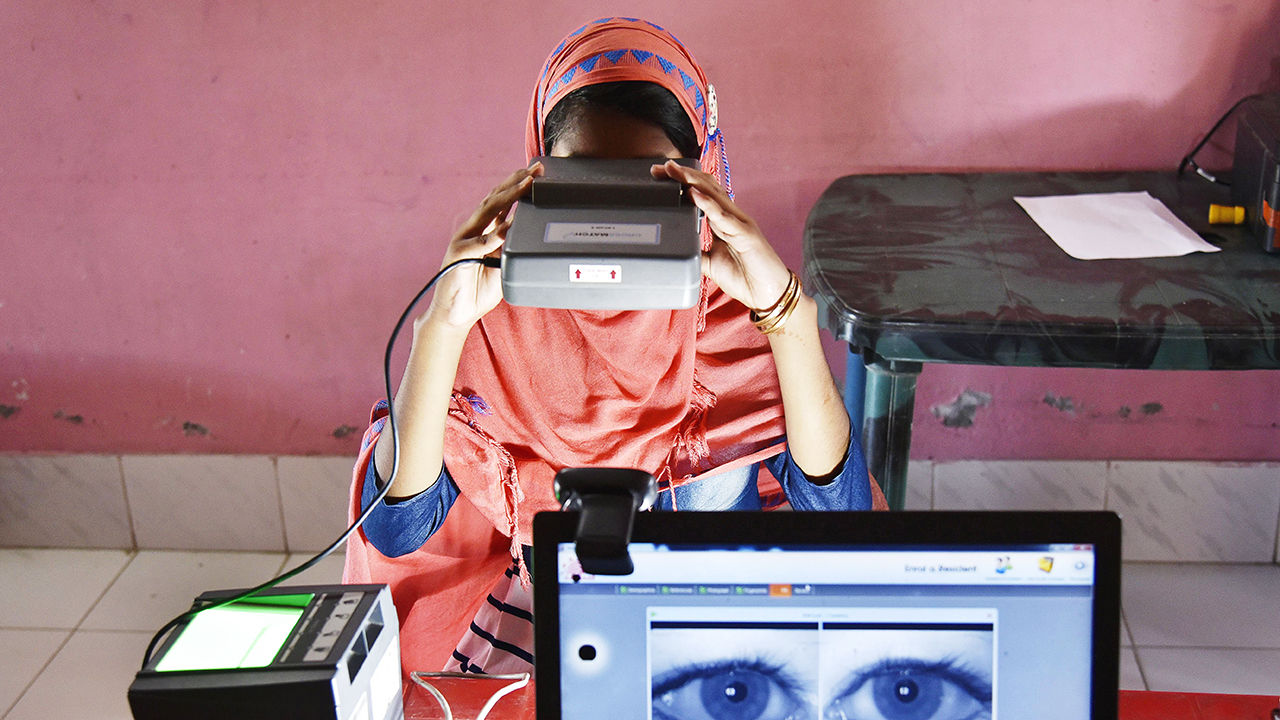



Economics as a social science involves discussing sensitive topics like inequality, development, and policy decisions that affect real people'

I've noticed a common pattern among students: they tend to value only positive feedback and some (not all)

Finding a normative statement in a Paper 2 case study or an IA newspaper article gives students a valuable entry