From BMW to Bureaucracy: How Toilet Access Exposes Inequality and Poverty
Before reading further, take 30 seconds to count: * How many toilets/bathrooms are in your house? * How many people live
Before reading further, take 30 seconds to count: * How many toilets/bathrooms are in your house? * How many people live

Ask any IBDP Economics teacher, and they'll tell you that mastering supply and demand curves and the AD/
In the IB Economics course, the difference between a good essay and an excellent one often lies not in what

I've noticed a common pattern among students: they tend to value only positive feedback and some (not all) become discouraged by constructive criticism. Yet, just like in the popular game Wordle, every type of feedback—whether it confirms what we're doing right (green), points us in a promising direction (amber), or eliminates unproductive paths (grey)—has tremendous value in the learning process.
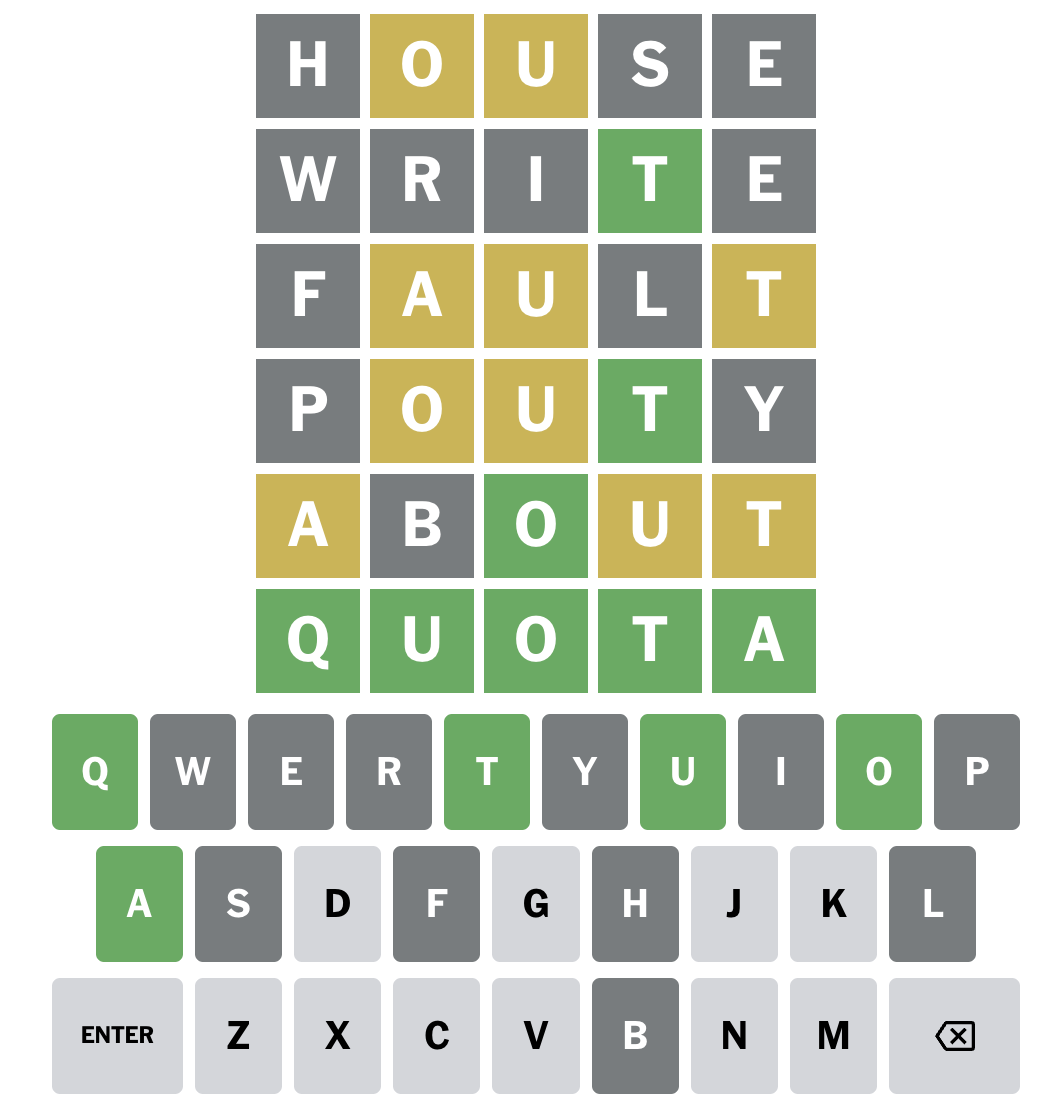
In a delightful coincidence while preparing for this blog post, today's Wordle answer turned out to be "QUOTA"—an economic term referring to a limit imposed on imported goods, a concept we study in Unit 4 of the IB Economics course when examining types of trade protection. This serendipitous connection between Wordle and economics perfectly illustrates how learning principles cross domains, whether we're solving word puzzles or analysing international trade policies!
In Wordle, players get three types of feedback:
Similarly, in economics essays and assessments, students receive different types of feedback:
It's natural to crave the dopamine hit of seeing those green tiles in Wordle or positive comments on an essay. Green feedback validates our existing knowledge and approach. It feels good, and it should—it represents mastery of a concept or skill.
This preference for positive reinforcement aligns perfectly with what we learn in Unit 2.4 of the IB Economics course (Critique of the maximizing behaviour of consumers and producers). In behavioural economics, we discover that humans don't always behave rationally; we display cognitive biases that affect our decision-making. Our tendency to focus on positive feedback whilst discounting constructive criticism is a form of confirmation bias—we seek information that confirms our existing beliefs and overlook information that challenges them.
Students often develop a "green-only mindset," where they:
Interestingly, in Wordle, the grey tiles are often more strategically valuable than the green ones. A grey tile eliminates a letter from consideration for all remaining positions, significantly narrowing your possible answers.
Similarly, in economics learning, discovering what doesn't work can be incredibly valuable:
Experienced Wordle players know a counterintuitive secret: sometimes it's better to deliberately ignore your green letters in the next guess. This strategic experimentation—trying an entirely new set of letters—can yield more information than building on what you already know is correct.
Take this scenario: your first guess yields two green letters, but you're uncertain about the remaining three. Instead of preserving those green letters in your next guess, you might strategically use five completely different letters. Why? This experimental approach accelerates learning by potentially eliminating (or confirming) multiple possibilities at once.
This applies brilliantly to economics learning:
When preparing for IB Economics assessments, students who experiment with different frameworks for analysis—even when they already have a workable approach—often develop more nuanced and sophisticated economic thinking. Just as in Wordle, sometimes temporarily sacrificing what you know works leads to greater breakthroughs.
Amber feedback represents the growth zone—where real learning happens. It indicates:
In the IB Economics internal assessment commentaries, amber feedback might highlight when you've identified a relevant theory but haven't fully linked it to the article or key concept.
Just as skilled Wordle players value all three colours of feedback, successful economics students learn to:
When receiving feedback on your next economics assessment, try this approach:
This balanced approach to feedback will accelerate your growth in understanding complex economic concepts and improve your ability to analyse and evaluate economic issues—essential skills for success in IB Economics.
Remember: in both Wordle and economics, the players who value all types of feedback are the ones who consistently improve their performance over time.
Content developed by Matt with AI collaboration.

Economics as a social science involves discussing sensitive topics like inequality, development, and policy decisions that affect real people'

Reading a recent article from The Guardian ‘Spreadsheets of empire’: red tape goes back 4,000 years, say scientists after

Economic development is perhaps the most powerful concept to master for IBDP economics exams. Unlike narrower economic topics, it seamlessly

I'm excited to share this resource on the distinct approaches to discussing concepts in academic writing. I'